
For 163 years, from 1820 to 1983, our government employed lightships to mark dangerous shoals or signal the entrances to harbors, rivers, and bays. They were placed in locations where it was impractical to construct a lighthouse. The first three lightship stations were established in lower Chesapeake Bay around 1820. They were more boats than ships, small vessels without sails that were towed to a location and anchored. Over the years more and more lightship stations were established. The Sandy Hook station off New Jersey, created in 1823, was the first "outside" station.

Joshua Doty of Somereville, N.J. was appointed by President Adams as the first keeper of Navesink on April 28, 1828. Since then, seventeen principal keepers and more than sixty assistant keepers worked the Navesink Light Station. Navesink, with two lighthouse towers, was a large station tomaintain. In the early 20th century when the keepers had only one tower to maintain, they were also assigned the responsibility for buoys on the Shrewsbury and Navesink Rivers from Sandy Hook to Red Bank.

As World War I wound down, the U.S. Navy established a planning committee of Capt. Tompkins, Cmdr. A.L. Bristol, Cmdr. R.S. Crenshaw to come up with "a safe and expeditious return of troops in the event of peace." In their five-page report, the committee proposed that Boston, New York, Chesapeake Bay Charleston be the major disembarkation ports. Delaware Bay was quickly added. It was believed that the Germans had laid various types of mines off America's east coast out to the 30 fathom line.
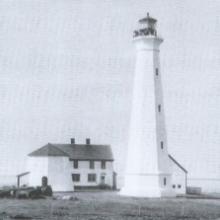
In 1993, Nova Scotia said goodbye to its last lighthouse keepers. It ended a long and venerable tradition, begun in 1734 when a light fed by sperm oil shone out over the French fortress of Louisbourg. For more than two-and-a-half centuries families tended Nova Scotia's wind and sea-battered lighthouses, but the final three decades of staffed lighthouses were marked by radical changes. Automated equipment replaced the eyes, ears and toil of the lightkeeper and his family.

In developing our Constitution the representatives of the new government were separated into two distinct camps. The Federalists who wanted the central government to have certain powers, and the anti-federalists camp who wanted almost all power to rest within individual states.

Along the far north coast of Scotland, you will find the small town of Wick, population about 8,000. The town is very old and forms a part of the land originally owned by the Clan Sinclair one of the oldest Scottish Clans. This area is also steeped in the history of the Stevenson family lightbouse engineers. Robert visited the area many times and was the first to look at the possibility of erecting a lighthouse there. It was left to his son Alan to construct the first lighthouse in the area.

From its inception the Lighthouse Service used Sperm Whale oil in the early spider lamps (of the colonial towers). However, in the early 1850's the price of whale oil skyrocketed from about 42 cents a gallon to well over $2.50 a gallon. The increasing demand for whale oil, coupled with a shrinking supply caused the unprecedented cost escalation. The maritime nations of the world began experimenting with other, incontrolcheaper, illuminants. Olive, porpoise and colza were a few of the oils considered for lighthouse purposes.

In 2009 the City of Oswego, New York, acquired the Oswego West Pierhead Lighthouse under the provisions of the National Historic Lighthouse Preservation Act Of 2000. Restoration work has begun using seed grant from the New York State Canal Corporation under management Of the city's Oswego Lighthouse Development Committee in partnership with the H. Lee White Marine Museum of Oswego.

One of the most famous lighthouses of antiquity was the pharos of Alexandria, which ancient writers included among the Seven Wonders of the World. It might naturally be supposed that the founder of so remarkable a monument of architectural skill would be well known; yet while Strabo and Pliny, Eusebius, Suidas, and Lucian ascribe its erection to Ptolemaeus Philadelphus, the wisest and most benevolent of the Ptolemean kings of Egypt, by Tzetzes and Ammianus Marcellinus the honour is given to Cleopatra; and other authorities even attribute it to Alexander the Great.

In the 1820s, American settlers streamed into the Mexican Territory of Texas in such numbers that Mexico became concerned, ceased giving land grants, and in 1830, banned further immigration. General Santa Anna established a dictatorship in 1834 and the following year the Americans in Texas revolted. The general and his army put down the revolt at the Battle of the Alamo in 1836, but Sam Houston countered with his rag-tag Texan army and defeated Santa Anna a month later, ensuring Texas's independence. For nine years Texas was an independent republic.