West Chop Lighthouse

The island of Martha's Vineyard lies six miles south of Cape Cod. It is basically triangular in shape and about 100 square miles in area. The island has three main towns: Edgartown, Oak Bluffs. and Vineyard Haven. Edgartown, now a wealthy resort town and tourist destination was, at one time, one of rhe primary whaling cities on the East Coast. Oak Bluffs (originally known as Cottage City) started out life as a summer Methodist Meeting campground, but it is now mainly a tourist destination.
- Read more about West Chop Lighthouse
- Log in to post comments
East Chop Lighthouse
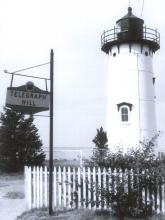
The north side of Martha's Vineyard Island is notched by a large V-shaped bay forming a harbor for the town of Vineyard Haven (originally called Homes Hole). The harbor is guarded on the east and west sides by capes known as East and West Chop. Since the beginning of our country, both chops have witnessed the passing of thousands of vessels. Until the construction of the Cape Cod Canal in the 1940s, the primary route of vessels transiting from Portland, Maine, in the north to New York and points south was past these two chops.
- Read more about East Chop Lighthouse
- Log in to post comments
Execution Rocks Lighthouse
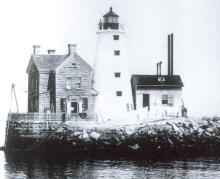
Several legends surround a low-lying reef at the eastern end of Long Island Sound. Exposed at low water, the reef is not visible during periods of high water. Over the years, early settlers to the area said that local Indians tied their enemies to the rocks at low tide, drowning them when the tide came in. The same story was repeated in later years, only with the British chaining captured colonialists to the rocks during the American Revolution. Of course, the tales have never been substantiated.
- Read more about Execution Rocks Lighthouse
- Log in to post comments
Lighting the Florida Keys
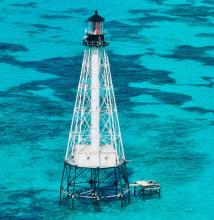
Many of the Spanish vessels returning home with treasures looted from the people of central and South America never made it back to Spain. Storms and hurricanes, uncharted reefs, poor or nonexisting charts, strong currents, and the low-lying keys and reefs of the southern Florida coast took their toll. The frequency of ship wrecks along the Florida Keys was so often that "wrecking" (plundering valuables from wrecked ships) was big business for many years. Pirates also lurked among the Keys, often displaying false lights to entice the passing ships onto a lee shore.
- Read more about Lighting the Florida Keys
- Log in to post comments
Cape Henlopen Beacon Light
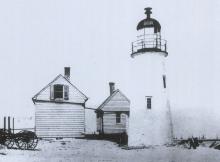
During the early years, the beacon light was referred to as the Cape Henlopen Lower Light. Later it was called a range and harbor light. Initially the rubble stone tower was about 45 feet high. No dwelling was associated with the beacon as Stephen Pleasonton, the fifth auditor of the Treasury in charge of our system at the time, felt that the service could save on expenses by having the keeper of the main light tend both aids.
- Read more about Cape Henlopen Beacon Light
- Log in to post comments
Cape Henlopen Lighthouse - 1764
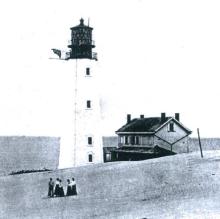
The Cape Henlopen Lighthouse was the fifth lighthouse constructed in the Colonies, completed in 1764, the same year as the Sandy Hook Lighthouse in New Jersey. The story of the Cape Henlopen Lighthouse is one of eroding sand, accreting sand, shifting sand, sand seeping into the keepers' dwelling and the tower, and amassing sand. Sand amassed in such large amounts that at times it piled up against the dwelling to the extent that the keeper's children could exit via tile upstairs windows and slide to the ground.
- Read more about Cape Henlopen Lighthouse - 1764
- Log in to post comments
Tillamook Rock Lighthouse - Part 1 & 2
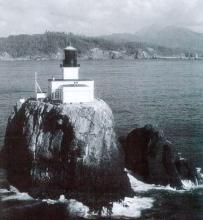
The Graveyard of the Pacific is a nickname given to the coastal region in the Pacific Northwest stretching from Tillamook Bay, on the Oregon Coast, northward to the tip of Vancouver Island, Canada. The prevailing northwest winds and south-streaming Japanese current tend to set vessels onto the lee shore. This coupled with the region's heavy seas; frequent and unpredictable weather; fog; and the rugged, rocky coast have caused the loss of numerous vessels and lives. More than 2,000 vessels and 700 lives have been lost near the Columbia River entrance alone.
- Read more about Tillamook Rock Lighthouse - Part 1 & 2
- Log in to post comments
The Ninth Act of the First U.S. Congress

In developing our Constitution the representatives of the new government were separated into two distinct camps. The Federalists who wanted the central government to have certain powers, and the anti-federalists camp who wanted almost all power to rest within individual states.
- Read more about The Ninth Act of the First U.S. Congress
- Log in to post comments
The Fastent: A Significant Irish Lighthouse

In the annals of lighthouse history, the stories of certain lighthouses are related over and over. Certainly tales of the four Eddystones are known to most who study pharology. Famous construction projects like the Bell Rock and Skerryvore lighthouses of Scotland and California's St. George Reef are often mentioned. The lighthouse afficinado usually knows about the beautiful Corduan of France, or La Coruna (the Tower of Hercules) in Spain, the world's oldest. And of course the Pharos was one of the Seven Wonders of the Ancient World.
- Read more about The Fastent: A Significant Irish Lighthouse
- Log in to post comments
Winslow Lewis: A Nineteenth Century Lighthouse Scalawag

Prior to the absorption of the U.S. Lighthouse Service by the Coast Guard in 1939, four individuals - more than any others - shaped the establishment and operation of lighthouses in the United States. For better or worse, these men are Winslow Lewis, Stephen Pleasonton, RADM William Bradford Shubrick and George Putnam. Lewis came on the scene in 1812 as contractor for the government and ultimately helped hold back our system of aids to navigation with his numerous antics.