The St. Marks Lighthouse
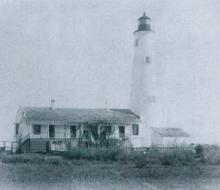
Visible for 15 miles across the Gulf of Mexico, the St. Marks Lighthouse is located at the mouth of the St. Marks River, in Wakulla County an area rich with history The lighthouse is located approximately 20 miles south of Florida's state capital, Tallahassee, and has been in operation since 1829. It is the second oldest lighthouse in Florida, and one of the most photographed landmarks on Florida's "Big Bend" coast. It is also a part of the St. Marks National Wildlife Refuge, established in 1931 which encompasses 68,000 acres and includes three counties.
- Read more about The St. Marks Lighthouse
- Log in to post comments
Lighting the Florida Keys
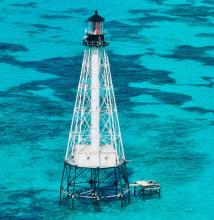
Many of the Spanish vessels returning home with treasures looted from the people of central and South America never made it back to Spain. Storms and hurricanes, uncharted reefs, poor or nonexisting charts, strong currents, and the low-lying keys and reefs of the southern Florida coast took their toll. The frequency of ship wrecks along the Florida Keys was so often that "wrecking" (plundering valuables from wrecked ships) was big business for many years. Pirates also lurked among the Keys, often displaying false lights to entice the passing ships onto a lee shore.
- Read more about Lighting the Florida Keys
- Log in to post comments
The Lighthouse at Volusia Bar
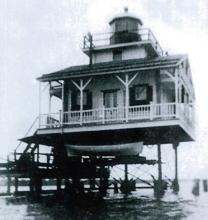
The story of the lighthouse at Volusia Bar begins and ends with FIorida's St. Johns River. Originating in the Fellsmere Swamp southwest of Vero Beach, the St. Johns is one of only a few United States rivers that flow north. The St. Johns is unique in that it flows north to empty into an ocean, the Atlantic, at Jacksonville. Over 300 miles long, the St. Johns has been a crucial transportation route since prehistoric times when native peoples used dugout canoes to travel its length. As Florida's longest river, it was, and continues to be, instrumental in the development of the state.
- Read more about The Lighthouse at Volusia Bar
- Log in to post comments
Pensacola Lighthouse: Pages from the Past

From: Collector's Office New Orleans
15 April 1823
To: The collector at Pensacola
- Read more about Pensacola Lighthouse: Pages from the Past
- Log in to post comments
Pensacola Lighthouse
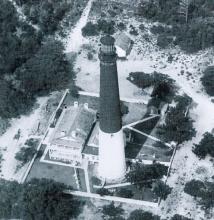
For more than four and a half centuries the ships of various nations have sought shelter in the protected waters of Pensacola Bay. For the past century and a half, the captains of vessels have had the good fortune to find a lighthouse at Pensacola Bay to guide them. Prior to that time, vessel captains were forced to rely on the bay's natural features to help guide them safely through the winding channel. The most prominent natural feature at the mouth of Pensacola Bay is the Barrancas. This Spanish word refers to a gully or ravine.
- Read more about Pensacola Lighthouse
- Log in to post comments
The First (and Second) Key West Lighthouse

In the summer of 1821, the United States assumed control over the old Spanish province of Florida, according to the terms of the 1819 Adams-Onis Treaty. General Andrew Jackson was appointed Territorial Governor in Pensacola, and troops from the United States raised the American flag over the old Castillo de San Marcos in the "Ancient City" of St. Augustine. The civilized section of Florida was in the north; the southern extremities were the haunt of pirates, Indians, and wreckers.
- Read more about The First (and Second) Key West Lighthouse
- Log in to post comments
Building the Ponce de Leon Inlet Lighthouse
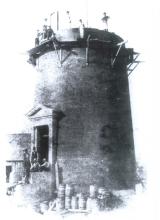
At just past noon on June 2, 1884, the Light-House Service tender, the schooner Pharos, anchored near the channel buoy off the bar at Mosquito Inlet, today known as Ponce De Leon Inlet, just south of Daytona Beach, Florida. From the rail of the vessel, forty-nine-year-old General Orville E. Babcock gazed at the spit of land to the west, shimmering under the high, hot summer sun.
- Read more about Building the Ponce de Leon Inlet Lighthouse
- Log in to post comments
Boca Grande Centennial
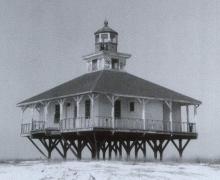
I the Gulf of Mexico, about halfway between the Florida coastal cities of Sarasota and Fort Myers, is a small island named Gasparilla, one of that state's better kept secrets. A segment of the world's wealthy, however, know it well as it is where they come, year in and year out, to enjoy winter in the sun. In spring, when the "social season" ends, another group of visitors arrives. These are a more rowdy bunch, albeit still of means, who come to try their luck in waters known as "the world's best tarpon fishing" and to enter the annual tarpon tournament.
- Read more about Boca Grande Centennial
- Log in to post comments
Sombrero Key Lighthouse: Pages from the Past
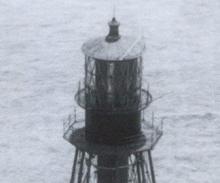
August 4, 1874 - The Assistant Josiah Butts went with the keeper on board a schooner from Havana loaded with sugar and bound from New Orleans, to buy some sugar from the Captain. While on board the assistant got several drinks of gin, so that he could hardly keep his watch in the light. He growled at me and insulted my wife. The schooner was named the Therissa of Fieldboronigh.
- Read more about Sombrero Key Lighthouse: Pages from the Past
- Log in to post comments
Hillsboro Inlet Lighthouse: Pages from the Past

May 26, 1907 - I told the 1st assistant to sweep out the boat and he refused to, said I can report him and be damned.
May 30 -Took foreman to Deerfield, found out 1st Assistant has our launch right up to the bridge against my express order not to do so, and that was the reason the pump was out of order and the engine over heated. The water is too shallow and full of (sand) banks to go nearer than 3/4 mile of the bridge.