
Ashtabula Harbor Light Station

Over the years, two dates have been mentioned regarding the establishment of the Ashtabula Harbor Light tation, originally known as the Ashtabula Beacon Light Station. One document states the light station was constructed prior to 1821, while other documents say it was constructed in 1836. The author believes the correct date is 1836, when the light station was built on a wooden crib approximately 40 feet square and just off Ashtabula's eastern pier at the entrance to the Ashtabula River. The hexagon-shaped tower was short in statute for its time.
- Read more about Ashtabula Harbor Light Station
- Log in to post comments
The Lost Otter Creek Point Lighthouse

In the very southeastern corner of Michigan is where the second lighthouse in that state stood. It was one of the earliest lighthouses built on Lake Erie. I ran across a mention of this lighthouse some years back and wondered just where it was located and why it was built. I found that the lighthouse stood for a little less than 20 years and very little was known about it. So, I decided to see if I could discover some of its history. The story you are about to read will give you all I have been able to find about the lost Otter Creek Point Lighthouse.
- Read more about The Lost Otter Creek Point Lighthouse
- Log in to post comments
Fairport Harbor Lighthouse: The Freedom Light

Lighthouses are responsible for saving lives and property, but this lid is the story of a lighthouse that went beyond the obligatory rescue of ships and crews, passengers and cargo. For nearly four decades, it was a beacon of hope for a despised, abused, and desperate faction ofsociety. Fairport Harbor Light was a critical stop on the underground Railroad that brought black slaves to freedom in Canada. And many years later, when its light was no longer needed, the lighthouse itself was saved by a group of insightful citizens who recognized its unique contributions to the American story.
- Read more about Fairport Harbor Lighthouse: The Freedom Light
- Log in to post comments
History of the Monroe Lighthouses, Monroe, MI: Only Yesterday
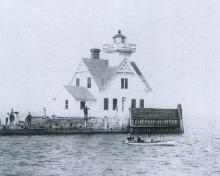
Sailors have often found Lake Erie to be the most challenging of the Great Lakes. Its shallowness can cause violent waves, especially during turbulent weather. On May 23, 1828 Congress authorized the Secretary of the Treasury to build a lighthouse on the west end of Lake Erie at a place known as Otter Creek Point in Monroe, Michigan. The decision came after years of pleas from residents, including Monroe's first newspaper editor, Edward D. Ellis.
Stephen Woolverton, Keeper of the Cleveland Harbor Lighthouse, 1831-1838

Lighthouse Keeper Stephen Woolverton wrote numerous letters to Fifth Auditor Stephen Pleasonton during the third decade of the nineteenth century. This correspondence provides glimpses not only into the life of an early keeper, but reflects the struggles of the growing Lighthouse Establishment in defining the role of a lighthouse keeper. There were 155 light stations in the U.S. when we first hear from Woolverton in 1831, no formal instructions were issued to keepers until 1835.
Cunningham Creek, Ohio: Only Yesterday

I thought I was starting to know something about lighthouses. After all, I have been researching and writing about lighthouses for over five years now. Then one day I was looking for some keeper's information in one of the microfilms produced by the National Archives, and on the oldest reel, I suddenly came to a lighthouse I never heard of before. "Cunningham Creek Ohio, J. R. Cunningham keeper starting 24 April 1843, at $350, Henry Richardson keeper starting 5 February 1846," and then, "this light abandoned." I was intrigued.
- Read more about Cunningham Creek, Ohio: Only Yesterday
- Log in to post comments
The Building of the Detroit River Light Station
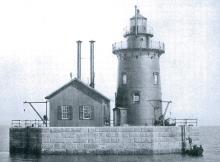
The vast majority of Great Lakes water borne commerce passes through the Detroit River. There was no busier shipping period than the last quarter of the 19th century. Vessels heading west from Buffalo navigated across shallow Lake Erie and then swung north into the very narrow Detroit River. The Detroit River is a swift running river that empties into the northwestern comer of Lake Erie dumping alluvial deposits that form narrow, shifting channels.
The Loss of Light Vessel 82

Huge gray waves still swept out of the darkness to meet the long steel hull of the ore freighter Champlain, but the worst was over now. Snow and spray no longer rattled like buckshot off the pilot house windows, and the scream of the winds had died almost to a whisper. First Mate Herbert Dupuie had the watch, thankful that the November gale had almost blown itself out. Lake Erie was still a wild expanse of churning waters, but the 80-mile-an-hour winds that had blown the tops off mountainous seas had died away and the heavy snows were past.
- Read more about The Loss of Light Vessel 82
- Log in to post comments