The Mirror of Light: Part Two

The major problem with early lighthouses was the small output of light from the wood or coal fires then being used. Lighthouse designers were constantly looking for ways to produce more light. Experiments were made with the types of fuel being burned, with the design of the braziers, which held the burning fuel, and with ways to direct or concentrate the light from the fire. The first method of projecting and directing the light started with the design of the reflector. In this story we will discuss the various types of reflectors that were used to create the 'Mirror of Light'.
- Read more about The Mirror of Light: Part Two
- Log in to post comments
Lighthouse Research

I do a lot of lighthouse research and I visit a large number of lighthouses each year. I am always struck by the lack of historical information at many lighthouse sites. When I visit a site I always ask if they have a list of the keepers who worked at the light.
- Read more about Lighthouse Research
- Log in to post comments
The Mirror of Light: Part One

The major problem with early lighthouses was the small output of light from the wood or coal fires then being used. Lighthouse designers were constantly looking for ways to produce more light. Experiments were made with the types of fuel being burned, with the design of the braziers, which held the burning fuel, and with ways to direct or concentrate the light from the fire. The first method of projecting and directing the light started with the design of the reflector. In this story we will discuss the various types reflectors that were used to create the 'Mirror of Light'.
- Read more about The Mirror of Light: Part One
- Log in to post comments
The Doty Dilemma: Technological Advancements in Lighthouse Lamps and Subsequent Patent Infringement

Most lighthouse research is drudgery. You go from item to item of mostly boring detail and slowly, very slowly, progress is made. But once in awhile, an unusual discovery is made and you run across a real gem buried in the musty details. That was the case with this story. In an obscure file box in the National Archives, I ran across information about Captain H. H. Doty that filled in many missing pieces of information about his struggles with our government some one hundred and thirty years ago.
The Jewel in the Sand: Manufacturing Lighthouse Lenses
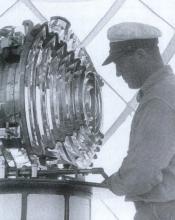
There are few things made by man that are more impressive or beautiful than a Fresnel lens. This crystal cage of glass sparkles in the sun splitting the light into tiny rainbows of glorious iridescent color like a precious diamond, and at night it sends forth its magnificent spokes of light to warn the mariner. Yet, all of this beauty comes from a mundane source, ordinary beach sand, with a few other ingredients, a process that was itself a bit of magic rought by the hand of ancient craftsmen.
A Bit Unusual: The Search for Alternative Lighthouse Fuels

Mixed in with the standard lighthouse fuels used over the years were some very strange attempts to improve lighthouse illumination. This story will give the reader an insight into a few of the more exotic fuels and other unusual modes of illumination that were tried over the last 200 years. I think you will find these more than - A Bit Unusual.
The Great Improver

Some engineers create from nothing, inventing new and hopefully useful objects. Other engineers take currently available objects and through craft and ingenuity, transform them into better, more useful objects. David Porter Heap, a little known contributor to our lighthouse heritage, did some of each. However, his main talent was in improving the designs of others, reducing their cost and simplifying their construction. He can truly be called the "Great Improver" of the United States Lighthouse Service. The following story will outline some of his life and work.
- Read more about The Great Improver
- Log in to post comments
Cunningham Creek, Ohio: Only Yesterday

I thought I was starting to know something about lighthouses. After all, I have been researching and writing about lighthouses for over five years now. Then one day I was looking for some keeper's information in one of the microfilms produced by the National Archives, and on the oldest reel, I suddenly came to a lighthouse I never heard of before. "Cunningham Creek Ohio, J. R. Cunningham keeper starting 24 April 1843, at $350, Henry Richardson keeper starting 5 February 1846," and then, "this light abandoned." I was intrigued.
- Read more about Cunningham Creek, Ohio: Only Yesterday
- Log in to post comments
Early American Lighthouse Illumination

Most of the available lighthouse books contain some descriptions of the early lamps and other illumination equipment used in American lighthouses. Unfortunately, these descriptions are just that, a verbal description of objects that are very hard for the average reader to visualize. The goal of this article is to put some flesh on the bones and to give you, the reader, not only descriptions, but also photographs where possible and drawings when necessary of these early American forms of lighthouse illumination.
- Read more about Early American Lighthouse Illumination
- Log in to post comments
American Made Lenses
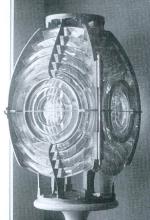
Most people, even most lighthouse enthusiasts, do not know that Fresnel lenses were made in America. The following story will tell how an American glass-maker, a disgruntled Frenchman, the need for an astronomical telescope in Japan, $11.95 of erroneous import duty, and our government's strong desire for 'Made in America' led to the manufacture of American Fresnel lenses.
- Read more about American Made Lenses
- Log in to post comments