
The First Minots Ledge Lighthouse
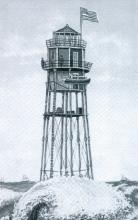
The demise of the first tower built to mark the hazardous Minots Ledge offCohasset, Massachusetts, is one of the most dramatic episodes in lighthouse history. Standing on a pile foundation, a relatively new construction technique at that time, the tower succumbed to a gale within 16 months of completion. Two assistant keepers perished. Although the event has been well documented in the past, primary source material recently uncovered by the author in the National Archives, expands and enriches our understanding of this tragic event.
- Read more about The First Minots Ledge Lighthouse
- Log in to post comments
Landing on the Ledge

Landing on Minot's Ledge is easy enough in summer time when the sea is smooth; but in winter there is hardly a time when the ladder that runs from the foot of the tower to the door forty feet above is of any service. Owing to the particular wash of the waves around the base, it is only on very rare occasions that a boat can tie near the ladder without danger of being swamped or dashed to pieces.
- Read more about Landing on the Ledge
- Log in to post comments
The Second Minots Ledge Lighthouse
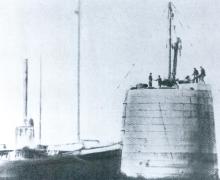
Since storms never cease driving ships on conveninet rocks, the need for at least a temporary light to mark the rocks of Cohasset was clearly indicated. Until a new, permanent tower could be constructed, the government stationed a lightship off Minots Ledge. When the storm of 1851 subsided, the steam tugboat R. B. Forbes was fitted with a temporary illuminant and anchored half a mile north of the Outer Minot in 15 fathoms of water [90 feet] to serve as a lightship. On April 20 another gale blew up of such intensity that the temporary lightship was forced to withdraw into Boston Harbor.
- Read more about The Second Minots Ledge Lighthouse
- Log in to post comments
Minots Ledge
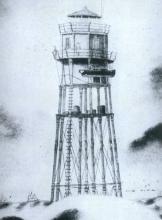
Hobomock, the Evil One according to the local rock Indians, lives under the ledges off the shores of Cohasset and the area north of Scituate, Massachusetts. In his fury, he creates the wild northeast gales that churn the seas into a dreaded maelstrom. To placate him, Indians left gifts on the rocks. The tidal currents in the area cause the rocks to seemingly reach out and grab passing vessels, dragging them to their doom. In the past 350 years, at least a thousand ships, often with entire crews and their cargos, have been lost here.
- Read more about Minots Ledge
- Log in to post comments