
The Great Exhibition

Surely these were words spoken, or similar expressions of relief, gratitude, and amazement, for the better part of nine decades, as legions of mariners navigated around the deadly dangers of Diamond Shoals. For more than 25,000 nights, this light flashed from a lighthouse at Cape Hatteras, delivering its signal of assurance, caring, and guidance through the green-tinted crown-glass of its French Fresnel lens.
- Read more about The Great Exhibition
- Log in to post comments
Still Standing Tall: A History of Methods Used to Protect the Cape Hatteras Lighthouse
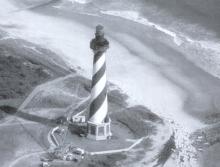
Since its completion in 1870, the Cape Hatteras Lighthouse on the coast of North Carolina has lit the way for thousands of mariners as they skirted around the dangerous Diamond Shoals off the Outer Banks. Lights and beacons have been used on the North Carolina coast since the early 1700's to guide ships as this was the principal area by which commerce entered the state. As commerce increased, the Diamond Shoals gained a reputation as the "Graveyard of the Atlantic" over 600 ships have been lost in the area over the last 400 years.
Cape Hatteras!
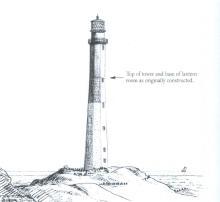
A long and very thin strip of land stretches south 175 miles along North Carolina's eastern shore. This barrier island, which is actually a series of islands, is known as the Outer Banks. These barrier islands migrate, constantly changing shape as they are affected by storms, ocean currents and even wind. During heavy winter storms the area can erode, only to accrete during the summer months. The Outer Banks is separated from the mainland by broad, shallow sounds and are occasionally breached by narrow inlets which open and close due to storms.
- Read more about Cape Hatteras!
- Log in to post comments
Confederate Letters on Cape Hatteras
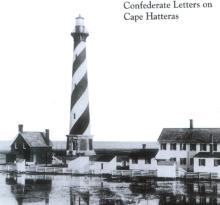
The history of many southern lighthouses, probably hastily researched, states that during the Civil War the lens from the tower was "buried in the sand" by the Confederates to keep it from the Yankees, or in some cases the lens was destroyed. The buried in the sand theory even followed a 1st order lens to the Pigeon Point lighthouse in California. Some articles and books on Pigeon Point state that the present lens was removed from Cape Hatteras, buried in the sand during the Civil War and then dug up and shipped to Pigeon Point.
- Read more about Confederate Letters on Cape Hatteras
- Log in to post comments