
Lighthouses and the Great Shake of 1886: Part 2
On Tuesday, August 31, 1886, the Great Charleston Earthquake rocked the East Coast at 9:51 p.m., creating shocks that were felt from Toronto to Key West. It was estimated to have been a 7.3 magnitude quake on the modern Richter scale, with an intensity of X on the Modified Mercalli scale, which ranges from I (barely felt) through XII (total desutrction). This was possibly the most powerful earthquake ever to strike east of the Mississippi River. It hit the village of Summerville, South Carolina, full force, leaving every house uninhabitable.
The USLHS and the Montana Lighted Airways
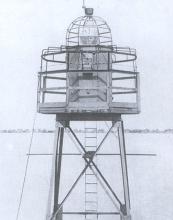
In the early 1920s, the War Department had requested that the United States Lighthouse Service (USLHS) help develop beacons that would shine skyward for use as guideposts by pilots, who had at that time only their compasses and visual skills for navigation. Pilots had been using lighthouses as markers since the earliest days of aviation. The Lighthouse Service was already equipped with structures, beacons, and a system of districts that could, it was hoped, easily and with minimal expense be adapted to provide more effective navigational landmarks for pilots.
- Read more about The USLHS and the Montana Lighted Airways
- Log in to post comments
Lighthouses and the Great Shake of 1886: Part 1
It began quietly enough. Disturbances in South Carolina's Abbeville County during the spring of 1886 sounded as if artillery were being detonated underground. Slight tremors of the earth were felt in the Charleston area in June of 1886. Two months later, a moderate tremor was felt by the lighthouse keeper at the Waackaack Light Station on New York Bay in New Jersey. The date was August 10, 1886, and the time was 2:10 p.m. The event lasted less than a minute and was accompanied by a low, rumbling noise.
The Lighthouse at Volusia Bar
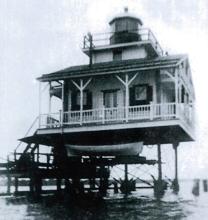
The story of the lighthouse at Volusia Bar begins and ends with FIorida's St. Johns River. Originating in the Fellsmere Swamp southwest of Vero Beach, the St. Johns is one of only a few United States rivers that flow north. The St. Johns is unique in that it flows north to empty into an ocean, the Atlantic, at Jacksonville. Over 300 miles long, the St. Johns has been a crucial transportation route since prehistoric times when native peoples used dugout canoes to travel its length. As Florida's longest river, it was, and continues to be, instrumental in the development of the state.
- Read more about The Lighthouse at Volusia Bar
- Log in to post comments
Fresnel Lens Restorations at the Ponce de Leon Inlet Light Station
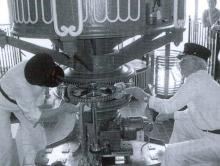
Our entry into the Fresnel lens restoration business came about as a result of the foresight of our executive director, Ann Caneer. In the early 1990s, Ann learned that the rotating first order lens at Cape Canaveral had been so damaged by vibrations from nearby rocket launches that it was soon to be removed from its tower. The Ponce de Leon Inlet Light Station's Board of Trustees agreed to make an offer to take the lens, restore it for display, and to build a lens exhibit building to house this important artifact.