The Missing Lighthouses of Illinois
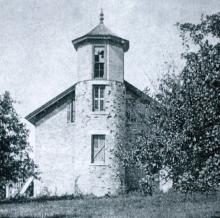
Lighthouse stories come from many sources. In this instance a chance encounter with a strange old photograph lead to the discovery of two missing lighthouses. In late 2007 we moved to the Chicago area and shortly after we arrived I decided to make a trip to the Chicago Historical Society to see what they had about lighthouses. I was going through their lighthouse photograph file when I came across a small 5 by 7 inch photo labeled "Old Port clinton Lighthouse, Illinois." I was familiar with a Port Clinton Lighthouse in Ohio, but had never heard of a Port Clinton, Illinois lighthouse.
- Read more about The Missing Lighthouses of Illinois
- Log in to post comments
The Harwich Range Lights, England
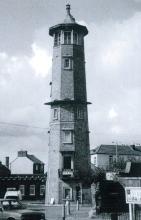
You see many unusual lighthouses when you take a U.S. Lighthouse Society tour. I was lucky to join such a tour of England and found the range lights at Harwich particularly interesting. These lights are amongst the oldest in England and are examples of very early range lights (what the English would call "Leading Lights"). They began life in private hands, were eventually bought by the Trinity House, were rebuilt or improved four times, were replaced by lights at another location, and were finally abandoned during their multi-century history.
- Read more about The Harwich Range Lights, England
- Log in to post comments
The Clock without Hands
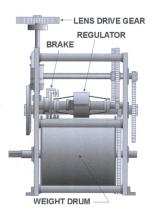
There are three major types of lenses used in lighthouse towers -fixed, flashing, and a combination of fixed and flashing. Flashing lights are the most effective and powerful. The first lens created by Augustin Fresnel was a flashing lens. The flashing lens rotates and has a number of bulls-eye lens panels that create beams of concentrated light (an eight-panel lens produces eight beams). As the lens rotates, the beams successively pass the view of the mariner giving what appears as a flash of light followed by darkness.
- Read more about The Clock without Hands
- Log in to post comments
The Stepping Stone to Ireland: Portpatrick and its Lighthouse
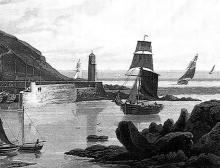
The late morning sun was warm as the bus ambled across the moors of Galloway western Scotland. The U.S. Lighthouse Society tour of Scotland was nearing completion, with just two days remaining, as the bus headed down the ‘Dinvin Burn’ toward the small harbor town of Portpatrick. We entered the town from the northeast and drove directly to the harbor and the old lighthouse at the port entrance, which we were about to tour.
The View Near Graemsay Island

In April 2004, I acquired a diary, a diary hand-written by none other than Alan Stevenson. Alan Stevenson succeeded his father, Robert Stevenson, as Engineer to the Northern Lighthouse Board (NLB) in 1843. It was a custom of the day for the board's engineer to cruise the Scottish coast for an annual inspection of lighthouses. The diary offers a rare glimpse into the activities during the travel in 1850 and 1851. Alan traveled on the NLB's iron-paddlewheel tender, Pharos III, as he made his inspection journey.
- Read more about The View Near Graemsay Island
- Log in to post comments
Brilliance & Prejudice: The Inventive John R. Wigham (Part Two)
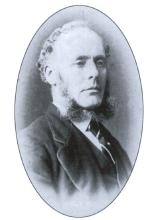
In the last issue of The Keeper's Log [Volume XXIII, No 2] you read about the brilliant and innovative designs of John Wigham, and yet why is it that you probably have never heard of him before? Have you known of gas being used to illuminate lighthouses? Perhaps you didn't know gas was ever used in any significant way. Have you heard of the Wigham group-flashing lamp? Why did John Hopkinson get all the credit for its equivalent, the group-flashing lens? Have you heard of Wigham's bi-form, tri-form and quadri-form lenses?
Brilliance & Prejudice: The Inventive John R. Wigham (Part One)
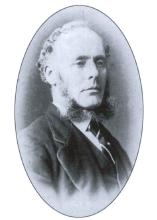
This is the story of a brilliant engineer who created some of the most interesting lighthouse equipment ever developed. His designs would be both praised and maligned and would lead to jealousy, conflict, prejudice, plagiarism, and the ultimate resignation of one of the leading scientists of the day. Part Two will appear in the next issue of The Keeper's Log.
Bell Rock: The 200th Anniversary of a Significant Lighthouse (Part I - V)
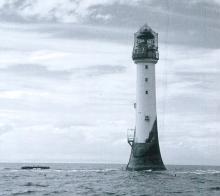
The year 2006 marked the beginning an important anniversary in the history of famous lighthouses. Two hundred years ago, in 1806, the design, development plans and construction authorization for the Bell Rock Lighthouse in Scotland were approved. This story covers the developments during 1806 and the early history of the Bell Rock. Future stories are planned for each of the years of 2008 through 2012, which will describe the happenings at the Bell Rock two hundred years previously as this famous lighthouse was built.
The Early Development of the Fresnel Lens: Part 6 (Other Makers)

This is the final segment of the story of the Fresnel lens makers. In this article the AGA, Pharos Marine, Automatic Power, Corning, Macbeth-Evans, Gebr. Picht, Dr. Genthe Glass, Nitsche & Gunther, Julius Pintsch, Wilhelm Weule glass and lens makers described. There are a number of other makers of navigation aids that have not been included in this series of articles because they did not produce glass Fresnel lenses.
The Early Development of the Fresnel Lens: Part 5 (Barbier, Benard et Turenne)
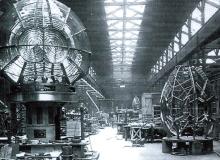
This is a continuation of the story of the Fresnel lens makers. In this article the Barbier, B6nard and Turenne (BBT) Company in France is described from its beginnings as a Fresnel lens maker for the world market, to its final demise when it was broken and merged into several other companies.