The Harwich Range Lights, England
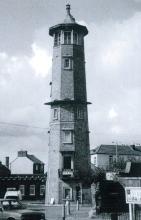
You see many unusual lighthouses when you take a U.S. Lighthouse Society tour. I was lucky to join such a tour of England and found the range lights at Harwich particularly interesting. These lights are amongst the oldest in England and are examples of very early range lights (what the English would call "Leading Lights"). They began life in private hands, were eventually bought by the Trinity House, were rebuilt or improved four times, were replaced by lights at another location, and were finally abandoned during their multi-century history.
- Read more about The Harwich Range Lights, England
- Log in to post comments
The Early Development of the Fresnel Lens: Part 4 (Chance Brothers)
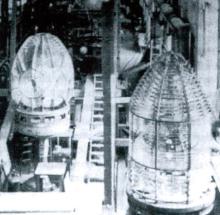
This is a continuation of the story of the Fresnel lens makers. In this article, the Chance Brothers Company in England is described from its beginning as a glass window maker to its production of Fresnel lenses for the world market, and to its final demise after being bought out and divided into several companies.
The Smalls
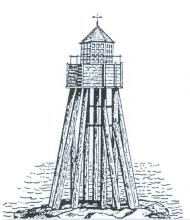
Extending out from the southwestern toe of Wales is a series of islets, reefs and rocks. Over the years, numerous vessels have fallen victim to these obstructions as they attempted to thread the relatively narrow St. George Channel between England and Ireland. The furthest west of these obstructions is cluster of rocks known as "The Smalls." This cluster of 20 rocks, some 20 miles from the nearest land, is constantly assaulted by wind and wave, and from every point of the compass. The highest rock of the Smalls rises only 12 feet above high water.
- Read more about The Smalls
- Log in to post comments
Wolf Rock Lighthouse
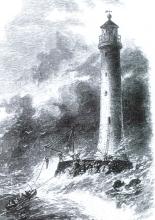
In 1855, after a three-year absence, James Douglass returned to Trinity House as the Chief Engineer. Trinity House is the corporation in charge of aids to navigation for England. During the next five years, he oversaw the construction of several lighthouses, many situated on shore, and one, The Smalls, a feat of some ingenuity. As it turned out, constructing The Smalls was good practice for what Trinity House handed him next. It was to be one of the most difficult and challenging that he or any other lighthouse builder was ever called on to undertake.
- Read more about Wolf Rock Lighthouse
- Log in to post comments
The Bishop: The Story Of The Bishop Rock Lighthouse
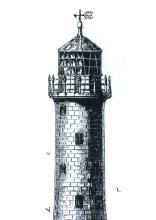
The Scilly Isles, of England, is the first landfall a mariner encounters when approaching the English Channel from the west. It was among these low lying, wave-washed islets that the Royal Navy experienced its worst peacetime disaster. In October of 1707 a naval squadron, commanded by Admiral Sir Cloudsley Shovel, was returning from the Mediterranean. The squadron encountered a gate shortly before making landfall and all but two of the frigates were swept onto the ledges and reefs which litter the western seaboard of the Scilly Isles.
My stay at the Lundy Lighthouse
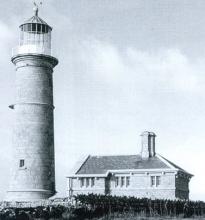
I read somewhere, years ago, that one could stay at an old lighthouse somewhere in England. It sounded like the stuff of which dreams are made, and provided me with hours of fantasies. I envisioned myself going there for a month or two and relaxing, looking out upon the pounding waves. I learned that the lighthouse was located on Lundy, an island off the coast of Devon. The Lundy Island folk sent me excellent literature answering almost all my questions concerning what to expect on such an unusual venture.
- Read more about My stay at the Lundy Lighthouse
- Log in to post comments
Isle of Lundy Lighthouses: A Paper in Memory of the Lighthouse Keepers of Lundy
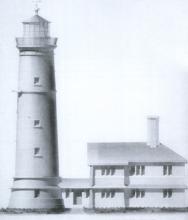
The approaches to the Bristol Channel along the northern coast of Cornwall and Devon offer very little shelter for the seafarer during severe weather conditions. Lundy, however, situated at the mouth of the Channel central to the busy sea lanes, is one exception and has provided an important refuge on the leeward side of the island throughout the historic period. Before the aids to navigation of the lighthouses were built, the island must also have proved hostile to the mariner, especially during hours of darkness and poor visibility.
Spurn Point Lighthouse
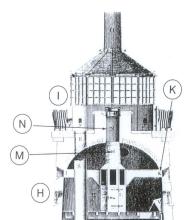
In 1676 a patent was granted by King Charles June II to Justinian Angell, a London Merchant, to allow him to continue, rebuild and maintain certain navigational lights he had erected upon Spurn Point to assist navigation along the coast and into the Humber River. Vessel losses had become so numerous, especially at night, that masters of merchant vessels contacted the owner of Spurn Point, Mr. Angell, and beseeched him to erect lights on his land to benefit vessels passing the area. The lights warned mariners of a sand bar which had formed out into the Humber River.
- Read more about Spurn Point Lighthouse
- Log in to post comments
The Isle of Wight Revisited

May I cast your mind back to the Spring 1987 Log, and in particular the article on the "Lighthouses of the Isle of Wight." At the time I thought this was a rather unsatisfactory item, not least because it overlooked the Needles, which is by far the most important and well known of the lighthouses on the Isle of Wight. But as I was not familiar with the subjects of the piece, I offered no comment thereon. Now, however, I have just had a spell of duty at St. Catherine's L.H.
- Read more about The Isle of Wight Revisited
- Log in to post comments
Roman Lighthouses
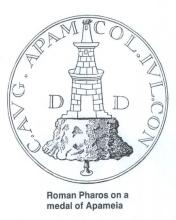
The first crude beacons to serve as lighthouses, in what is now Italy, were probably constructed during the heyday of ancient Greece. Before the rise of the Roman Empire the Greeks traded heavily with the colonies of the southern Italian peninsula and Sicily. However, we only have documentation of lighthouses in Italy from Roman times. Evidence comes from the writings of the Roman historian Pliny, bas reliefs, coins, decorations on vases, mosaics and even sarcophagi.
- Read more about Roman Lighthouses
- Log in to post comments