Lincoln Rock Lighthouse
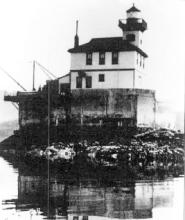
Rocks, reefs, and small islands out in the middle of what appears to be open waters of southeast Alaska were a constant worry to mariners ever since boats began to navigate through the Inland Passage. One such place is Lincoln Rock in Clarence Strait off the west coast of Etolin Island. The Alaska ferries go by Lincoln Rock on its west side, and many of us who were here before the 1970s saw the 35-foot, white, square tower on a house located on a small island.
- Read more about Lincoln Rock Lighthouse
- Log in to post comments
Eldred Rock Lighthouse: Alaska's Oldest Original Lighthouse
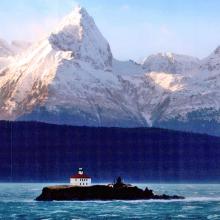
Gold! Its discovery in August 1896 along the Klondike River in Alaska set off the Klondike Gold Rush and spurred construction of coastal towns along the Inside Passage of British Columbia and Alaska. Eventually, the route north was marked with fog signals, buoys, and lighthouses, but not before tragedy and turmoil tainted the story. Death and disappointment came first, followed by struggle and uncertainty. Nowhere are those tales more vividly preserved than in the century-old Eldred Rock Lighthouse.
Guard Island Lighthouse: An Alaska Family Station
In early July 1897, gold was discovered in Rabbit Creek near Dawson City in the Yukon. A few weeks later, several grubstake miners arrived in Seattle and San Francisco, showing off their bags of gold. One nugget was said to be the size of a walnut! The Klondike Gold Rush began, sending a shockwave of excitement around the world. The "Panic of 1893" and the subsequent "Panic of 1896" had sent the United States plummeting into the throes of a recession, with serious bank failures, high unemployment, and businesses out of money.
Guard Island Light Station: Only Yesterday
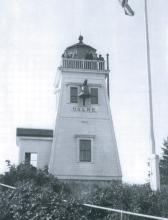
In 1867, the United States acquired the territory of Alaska for $7,200,000 (about 2 cents an acre) - a huge bargain. Two years after the acquisition, the Senate called for a review of the safety of the Pacific Northwest coasts, requiring the President to, "... detail an office to select from public lands such prominent points on the coasts of Oregon, Washington Territory, and Alaska...in his judgment may be necessary for lighthouse purposes, in view of the future commercial necessity of the Pacific coasts and to reserve the same for the exclusive use of the United States."
- Read more about Guard Island Light Station: Only Yesterday
- Log in to post comments
Tree Point Lighthouse
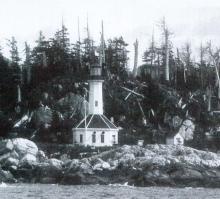
In the mid-winter of 1954 I flew from Detroit to Seattle and then on to Sitka Island, Alaska. From there, I was taken in a two-engine amphibian to Ketchikan where the coastal mountains allowed only a narrow ledge for the town and no place for an airport. Water planes had always been my favorites: flying boats, seaplanes, amphibians, and float planes. It was a short flight and the splashy landing took me by surprise.
- Read more about Tree Point Lighthouse
- Log in to post comments
Cape Hinchinbrook Isolation: Tinkham Tales
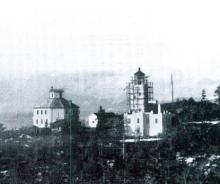
On one occasion while waiting in Cordova for a ship, advantage was taken of the few days interlude to make a maintenance inspection of the Cape Hinchinbrook Light Station. This station is located at the entrance to Prince William Sound, thirty miles south and east of Cordova. A fishing boat and crew was hired for transportation to the cape and return. Leaving Cordova at midnight the boat arrived at the station about five in the morning and anchored. A safe landing was made with a dinghy through light surf to a narrow beach below a high cliff on which the station was situated.
- Read more about Cape Hinchinbrook Isolation: Tinkham Tales
- Log in to post comments
Constructing Cape St. Elias: Tinkham Tales

Arriving in Ketchikan, Alaska, headquarters of the 16th Lighthouse District, in April, 1915, I assumed my new position of Superintendent, making me the district engineering officer and second ranking official. My chief, the district Lighthouse Inspector, was Captain W. C. Dibrell, formerly of the US. Coast and Geodetic Survey where he acquired the title of Captain. Our first conference indicated that the most urgent problem confronting the district was the establishment of a lighthouse and fog signal station on Cape St. Elias in the Gulf of Alaska.
- Read more about Constructing Cape St. Elias: Tinkham Tales
- Log in to post comments
Scotch Cap Light Station, Alaska and the 1946 EARTHQUAKE

The Lighthouse Service began constructing light stations in Alaska in 1902. The Sentinel Island and Five Finger stations of Southeast ' Alaska were the first to go into service on March 1, 1902. The third station completed was that at the Scotch Cap on Unimak Island in the Aleutians. The station went into operation on June 18, 1903. A sister station, Cape Sarichef, on the north end of the Unimak Pass was completed the following year.
Scotch Cap Light Station, Alaska: Only Yesterday
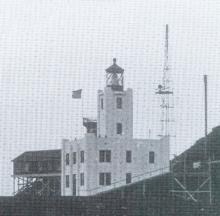
The Lighthouse Service began constructing light stations in Alaska in 1902. The Sentinel Island and Five Finger stations, of Southeastern Alaska, were the first to go into service on March 1, 1902. The third station completed was that at Scotch Cap on Unimak Island in the Aleutians. The station went into operation on June 18, 1903. A sister station, Cape Sarichef, on the north end of Unimak Pass was completed the following year. In 1901 Congress authorized $40,600 to construct a lighthouse and fog signal station at Scotch Cap on Unimak Island in the eastern end of the Aleutian Islands.
Memories of a Lighthouse Engineer
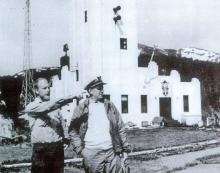
After graduating as a civil engineer from Oregon State University and taking a Civil Service examination early in 1927, I entered the Lighthouse Service in San Francisco as a Junior Engineer. I was transferred to the Alaskan district as an assistant engineer about March of 1930. Captain Dibrill was superintendent. He had gained his title from the U.S. Coast and Geodetic Survey Service, where he had been an officer and captain of one of their vessels. I do not know when he came to Alaska, but he had been there many years by the time I arrived.
- Read more about Memories of a Lighthouse Engineer
- Log in to post comments