The Employment of Cut-Glass Optics in Lighthouses and Lightvessels
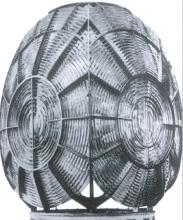
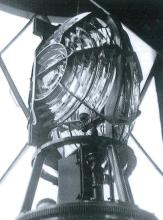
In 1813 Augustine Fresnel devised the division of the central bulls eye refracting glass into separate angular units capable of being arranged to utilise rays from the oil lamp burners available at that time to produce beams of light as a signal from lighthouses and beacons.
Memoir of an English Lighthouse Engineer: An Autobiography by Kenneth Sutton-Jones (Part 6)
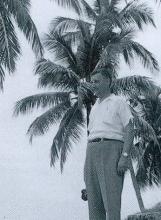
Whilst in Java in 1947, I was urged to make my acquaintance with Australia and on the 3rd May I embarked on a flying boat operated this time by QUANTAS, the Australian long-haul airline. My weeks in Borneo in 1947 had been in a world as if enchanted; it was in a warm, moist hothouse of strange forests, swamp and rivers and with one immensely regal mountain. In later years it had been urbanized and become sophisticated at the behest of so-called 'civilisation' and emancipation. But in 1948 it was still there in its undeveloped and charming simplicity and I longed to experience more!
Memoir of an English Lighthouse Engineer: An Autobiography by Kenneth Sutton-Jones (Part 5)
My launching took place at the tail end of the Great British Empire. The Crown Agents had an office in Westminster where very able, fair-minded and expert engineers, inspectors and administrators toiled in proposing and supplying the equipment for Colonial Authorities. I was called to their 'EM3' [Electro-Mechanical] Department on numerous occasions. Having liaised with my technical colleagues, I was able to recommend means to repair or refurbish lighthouse equipment of many types installed in colonies and overseas administrations in distant, and often remote, parts of the world.
Memoir of an English Lighthouse Engineer: An Autobiography by Kenneth Sutton-Jones (Part 4)
The glass factory of Chance Brothers was established at Smethwick in 1824 and was managed by many able members of the Chance family. The extension into manufacturing lenses for lighthouses commenced in 1850 and its first products were available in 1851 with James Timmins Chance in command. He was assisted by Dr. Hopkinson, and a line of very able designers and engineers followed under men of extreme enthusiasm, right up to the commencement of World War II. These included the names of Wharton, Jeboult, and particularly, Kenward.
Memoir of an English Lighthouse Engineer: An Autobiography by Kenneth Sutton-Jones (Part 3)
In 1940 Britain was truly on the brink. Germany had failed to annihilate our beleaguered force on the Dunquerque beaches thanks to a brave armada of small boats and ships. It became obvious that the tactics of the First World War were no match for the Luftwaffe and a horrible foreboding prevailed, lest we should be invaded, as the rest of Europe and Norway had been.
Memoir of an English Lighthouse Engineer: An Autobiography by Kenneth Sutton-Jones (Part 2)
The early years spent at Chance Brothers lighthouse works had taught me how and why each component was designed and made, so as to render the years of reliability while requiring remarkably little servicing. Accordingly, I had appreciated how specially skilled the designers had been. They were ably emulated by very committed successors of whom we were very proud. Notable was Harold Gough, a giant in glass technology and optics.
Memoir of an English Lighthouse Engineer: An Autobiography by Kenneth Sutton-Jones (Part 1)

Imagine you are sailing from the West Atlantic inbound for Plymouth in winter, three hundred years ago. Your ship, a massive and magnificent four-master at the behest of current and winds, is running before the rising westerly gale. The pall of cloud denies observation of stars. As the vessel pitches you cannot see where sea meets cloud, which in any case, is low enough to form a fog with the spume from the wave tops. Yet, you are making good progress towards your desired landfall off the south west of Ireland, as indicated by the log and compass.