The United States Light-House Board - 1860: William F. Smith

William Farrar Smith was first and foremost an Army engineer. His military career spanned the years of the American Civil War, and he saw duty in that conflict as both a battlefield commander and as a construction engineer. Prior to the war, he served as a lieutenant and the district engineer of the 11th Light-House District (Great Lakes). With the rank of captain, still a junior officer, he was appointed as engineering secretary to the Light-House Board in 1859 and served until reassigned to wartime duties in April of 1861.
The United States Light-House Board - 1860: Raphael Semmes

Raphael Semmes is and will always be most noted for his command of the Confederate raiding ship Alabama during the American Civil War. As a military officer he is perhaps unique in having served with both the Navy and Army of the United States and both the Navy and the Army of the Confederate States of America. Largely self-educated, he was well read, fluent in several languages, and an astute student of international law. His interests and knowledge extended as well to astronomy, weather patterns, and military, social, and cultural history.
The United States Light-House Board - 1860: Alexander D. Bache
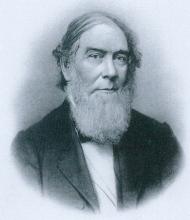
Alexander Dallas Bache (pronounced Bay-sch) was, at the time of his appointment to the Light-House Board, perhaps the pre-eminent American scientist of his time. The legislation that created the board called for it to include two "civilians of high scientific attainment," and Bache clearly met this qualification. Had the board been created some 60 years earlier, the nation's then-premier scientist, Benjamin Franklin, undoubtedly would have been appointed; it is appropriate then that his great-grandson, Alexander Bache, assumed this important duty.
The United States Light-House Board - 1860: Andrew A. Humphreys

Andrew Atkinson Humphreys was a career Army officer who distinguished himself on the battlefields of the Civil War and in innumerable assignments as a military engineer. He served as the chief of engineers of the Army from 1866 until 1879. Humphreys served two different terms on the Light-House Board. The first was from May 1856 until February 1862, when he was relieved to assume wartime duties. During this term he chaired the board's Committee on Engineering. Following his Civil War commands, he was reappointed to the board in February 1870 and served until January 1874.
The United States Light-House Board - 1860: Joseph G. Totten

Joseph Gilbert Totten, a career army engineer, was a member of the 1851 Congressionally-approved committee that reviewed the state of lighthouses and navigational aids ofthe United States. He was appointed to the permanent Light-House Board at its inception on October 9, 1852, and would serve for twelve years, with one brief intermission, until his death.
The United States Light-House Board - 1860

Lighthouses and other navigational aides to assist ships in the aters of the United States first came under Federal jurisdiction in 1789, in the earliest days of our nation. By 1852, America's emergence as a major seafaring nation, coupled with the growth of the system and new technologies, dictated the need for stronger, more scientifically-based planning, construction, and operation of these lights and aides.
- Read more about The United States Light-House Board - 1860
- Log in to post comments
Joseph Henry: A Lifetime Sense of Duty
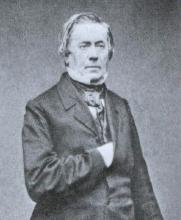
Professor Joseph Henry was involved with the Light-House Board from its inception in 1852 and was an integral part of infusing science into the American lighthouse service. He was one of our country's first practicing enthusiasts for original and applied research. At the request of President Millard Fillmore, Henry Joined the Light-House Board. But, one must ask, why would a learned man like Joseph Henry, known as the "Great Old Man of Washington," serve as a volunteer for the Light-House Board?
- Read more about Joseph Henry: A Lifetime Sense of Duty
- Log in to post comments