From Braziers and Bougies to Xenon: Part III
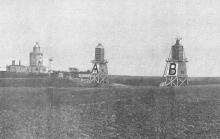
One of the first lamps burning gasified oil was developed by Nyberg and Lyth in Sweden 1881. It worked by vaporizing colza oil and burning it without a mantle as a Bunsen burner does. However, this type of lamp was not efficient at producing additional light output. The next step was the addition of the incandescent gas mantle invented by Carl Auer von Welsbach, in Vienna, in 1885. This led to the first crude kerosene Incandescent Oil Vapor lamp, which was installed at the L'Ile Penfret lighthouse, by the French, in 898.
- Read more about From Braziers and Bougies to Xenon: Part III
- Log in to post comments
From Braziers and Bougies to Xenon: Part II

In 1836, Monsieur Franchot invented the Moderator lamp where a spiral spring operated piston made oil flow to the wicks through constricted valve known as the moderator. These lamps were used in most fixed lenses in France, and in America when Fresnel lenses were first installed during the 1850s. However, they were not used in American lighthouses after about 1865.
- Read more about From Braziers and Bougies to Xenon: Part II
- Log in to post comments
From Braziers and Bougies to Xenon: Part I
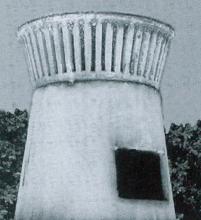
The early mariner's warning lights consisted chiefly of open fires and later of fire beacons maintained on a grate or in an iron basket known as a brazier and shown from an elevated location or platform near the coast. They were often unreliable because of the variability between burning well, with lots flame and therefore light, or burning poorly with little flame or much smoke obscuring the light. These beacons were maintained both by public and private enterprises. Patents were granted to certain individuals for the upkeep of beacons in England and Scotland.
- Read more about From Braziers and Bougies to Xenon: Part I
- Log in to post comments