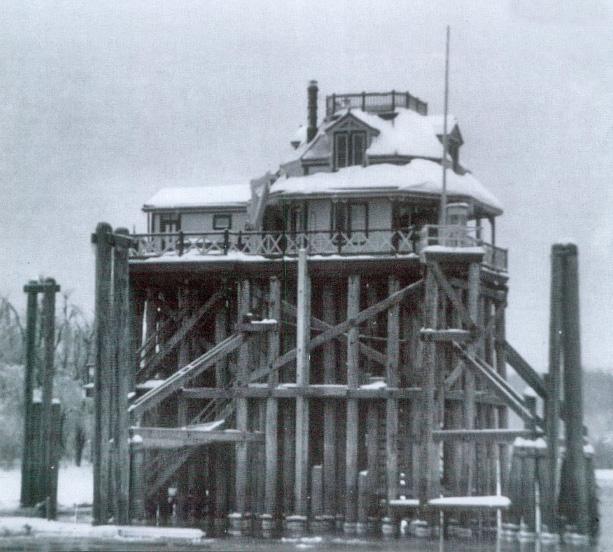
Since settlers began populating Washington Territory - the present states of Oregon and Washington - the mighty Columbia River has been a major water highway for the transportation of goods. Much of the river between its mouth and Portland, Oregon is wide and runs deep. But there are shallows and a few islands to restrict navigation. From the Lighthouse Service's earliest presence on the west coast, aids to navigation were provided on the Columbia River. One of the first group of lighthouses on the west coast was established at Cape Disappointment, on the north side of the entrance to the river. About the same time, eleven unlighted buoys were placed in the river. Eventually, the Service added more aids to assist mariners navigate the 115 miles from the river's mouth to Portland. By 1892 there were 38 river lights. The Board mentioned in that year, "The post lights in the Columbia and Willamette Rivers...are of great benefit to navigation, and night boats now run regularly on the Columbia and Willamette Rivers. They are much use during fog as the lights can be seen, except in very dense fogs, at a distance of 100 yards or more...without their aid night boats could not run regularly..."
- Log in to post comments