
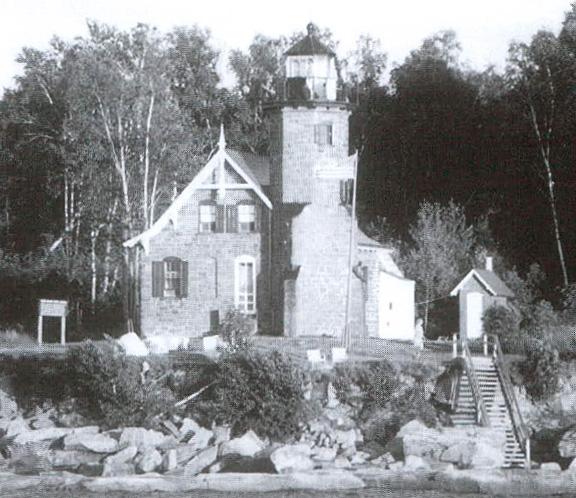
Great Lakes Light Stations were seasonal and operated from the time ice broke up enough yin the spring to allow ships to move until shipping ceased in the fall. A season could be as long as March to December or as short as mid-May to early November. Most of the Great Lakes light stations were small single or two family stations. However, the addition of a fog signal at a station would require more than two keepers. Because the stations were seasonal, Great Lakes Keepers were paid less than their counterparts on the coasts. If a keeper became incapacitated at a single family station, his wife and older children took over his duties. At Sand Island, Emmanuel Luick's wife, Ella, was an unpaid keeper during those times when Keeper Luick was gadding about Bayfield or sick. Ella was at Sand Island from 1889 to 1905 when she went back to Rhode Island and divorced Emmanuel. Although an assistant was assigned from time to time, they didn't stay long. Perhaps Keeper Luick was a tough man for which to work. Henry Irvine arrived on May 12, 1902 and departed 14 days later. On November 23, 1903 the Lighthouse Service assigned Ella Luick as an Assistant Keeper at a rate of pay of $400 a year
- Log in to post comments