
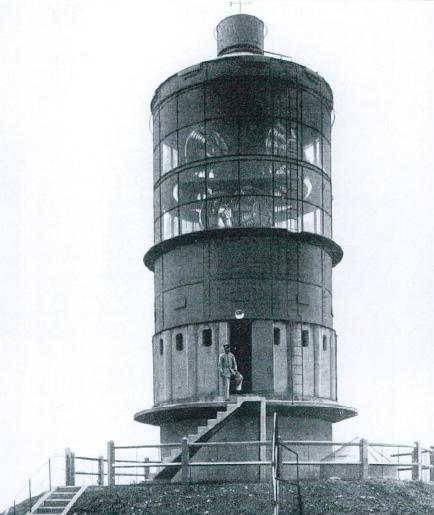
In May 1918, the United States government decided to set up an Air Mail Service. The U.S. Department of Commerce created an Aeronautics Branch and daytime only flights began. By the early 1920s the Department of Commerce decided that the best way to establish nighttime air routes across the country was through the use of lighted airway beacons. Each airway beacon consisted of a tower that supported a white rotating beacon searchlight with a 1,000- watt lamp and a 24-inch diameter mirror. The beam from the airway beacon was a high-intensity beam of light with an approximate 5-degree wide beam width visible for 20 to 40 miles in clear weather. The beam was aimed 1.5 degrees above the horizon. A small percentage of the beacon's light was also reflected upward to provide close-range visibility.
- Log in to post comments