
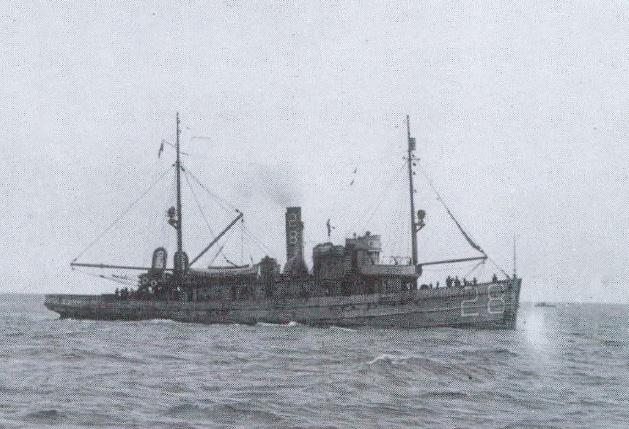
As World War I wound down, the U.S. Navy established a planning committee of Capt. Tompkins, Cmdr. A.L. Bristol, Cmdr. R.S. Crenshaw to come up with "a safe and expeditious return of troops in the event of peace." In their five-page report, the committee proposed that Boston, New York, Chesapeake Bay Charleston be the major disembarkation ports. Delaware Bay was quickly added. It was believed that the Germans had laid various types of mines off America's east coast out to the 30 fathom line. Thus, the committee proposed that a channel 2,000 yards wide be swept from this point offshore to the harbor or bay entrance. A temporary lightship would then be placed in midchannel at the entrance of the swept lane leading to the regular aids to navigation off the port. The committee added that a radio compass station be established at the entrance to the disembarkation ports to further assist returning vessels. Secretary of the Navy Josephus Daniels and Acting Chief of Naval Operations Capt. W.V. Pratt both approved of the plans on November 14,1918.
- Log in to post comments